
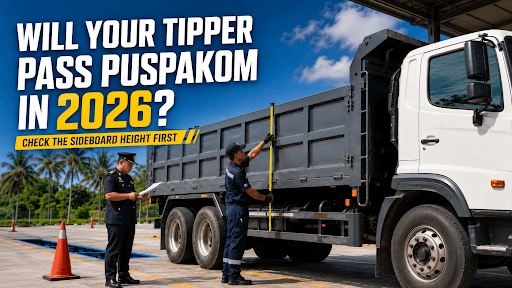
Tipper Lorry Sideboard Height Rules Malaysia 2026: What Operators Must Know Before Going to Puspakom
Tipper lorry operators in Malaysia need to pay close attention to the sideboard height before sending their vehicles for Puspakom inspection. JPJ announced tighter inspection procedures for heavy-duty dumper and tipper lorries from 1 June 2025, and these checks remain important for operators preparing for 2026 renewals. The rule affects operators who carry special loads such as fertiliser, coal, fly ash, gypsum, sawdust, corn, palm kernel, and paddy. JPJ said the enforcement supports the use of kod badan khas for these vehicles and aims to prevent misuse of vehicle specifications on public roads.
Many lorry owners only notice this issue when their vehicle fails at Puspakom. The common problem comes from sideboards that do not match the approved permit, APAD condition, and JPJ technical plan. Some operators install taller sideboards to carry more volume, but the inspection now checks whether the body structure matches the approved use. For searches like tipper lorry sideboard height Malaysia, kod badan khas lorry, and tipper lorry inspection, the main concern stays the same, your lorry body must match your approved documents.
What is the tipper lorry sideboard height rule in Malaysia?
JPJ and Puspakom now check dumper and tipper lorries against the approved sideboard height stated in the APAD permit and vehicle technical plan. The commonly reported limit for affected tipper and dumper lorries is 762mm, and some inspection references also mention 610mm, depending on the vehicle gross weight category. Operators must not treat 762mm as a free permission to modify any truck body. Your approved permit, technical plan, body code, and cargo type still determine whether the truck passes inspection.
This rule matters because tipper lorries carry loose materials that shift during transport. Higher sideboards change how the load sits inside the body, and this affects weight control, road safety, and permit compliance. JPJ wants the body type and cargo type to match the approved vehicle use. If your lorry carries special cargo, you need to prove the vehicle approval matches that cargo during inspection.
What is ‘kod badan khas’ lorry
Kod badan khas means a special body code assigned to a commercial vehicle based on the body type and approved cargo use. For dumper and tipper lorries, JPJ applies this code to vehicles that carry certain special loads. The listed materials include fertiliser, coal, fly ash, gypsum, sawdust, corn, palm kernel, and paddy. This matters because the code links the lorry body to the material the operator may carry.
A tipper lorry used for palm kernel should not operate with documents that show another cargo category. A lorry carrying fertiliser should also match the permit and technical plan for that use. If the body code, permit, and actual cargo do not match, Puspakom has grounds to fail the vehicle. This gives operators a clear reason to review documents before inspection, instead of only checking the physical condition of the truck.
Who does this rule affect?
This rule affects operators of heavy duty dumper and tipper lorries that transport special cargo. It affects quarry operators, plantation transporters, agriculture logistics operators, construction material suppliers, fertiliser distributors, biomass suppliers, and companies that move loose bulk goods. The rule also affects owners who bought a used tipper lorry without checking whether the existing body code matches their intended business use.
A used lorry buyer should check more than the engine condition and chassis condition. The buyer also needs to ask for the APAD permit details, JPJ technical plan, body code, and previous Puspakom inspection record. A truck may look ready for work, but it may still fail if the body height or cargo approval does not match the intended use. This matters more for buyers who plan to use a recond or used tipper lorry for palm kernel, paddy, coal, fertiliser, or similar loads.
Why operators fail Puspakom inspection
Operators usually fail because the sideboard height exceeds the approved limit or does not match the permit condition. Another common issue comes from missing documents during inspection. JPJ stated that owners transporting special cargo must present a valid commercial vehicle approval offer letter, known as STK, and the relevant permits during inspection at Puspakom. The purpose is to confirm that the lorry body type and cargo type match approved specifications.
Some operators also fail because they modified the lorry body after approval. A taller sideboard may seem practical for carrying light bulk material, but inspection officers compare the body against approved records. If the body structure no longer matches the technical plan, the vehicle faces rejection. This creates downtime, extra workshop costs, retesting costs, and possible delivery delays for the business.
What documents should operators prepare before Puspakom?
Prepare your documents before booking an inspection. You should have the APAD permit, commercial vehicle approval offer letter, JPJ technical plan, vehicle registration details, and any records linked to approved body modification. You should also confirm the load type stated in the documents. The inspector needs to see that your tipper lorry body, permit, and cargo use match the approved details.
Do not wait until inspection day to check these papers. Review the truck body height, body code, and cargo category before you send the lorry to Puspakom. If the documents show a different cargo use from your current operation, speak to the relevant authority or a qualified commercial vehicle consultant before inspection. A simple document review may save days of delay.
What happens if your tipper lorry fails inspection
JPJ gave operators two correction paths for failed vehicles. The first path is to refer to APAD to correct the permit and obtain a new one based on the original load stated in the technical plan. The second path is to apply to JPJ for a revised technical plan based on the correct body code for the load carried. JPJ also stated that owners must adjust the sideboard height to 762mm with no change to the existing dumper or tipper body code before presenting the vehicle for reinspection.
The right path depends on why the lorry failed. If the documents do not match the cargo type, the operator needs to solve the paperwork issue. If the sideboard height exceeds the approved measurement, the operator needs to modify the body to match the requirement. If both issues exist, the operator should solve both before reinspection because Puspakom will check the body and documents again.
How to prepare your lorry before inspection
Start with a sideboard height check. Measure the sideboard and compare it with the approved technical plan. Do not rely on visual checks because a small difference may still affect inspection. Record the measurement and keep clear photos for internal reference.
Next, check your APAD permit and body code. Make sure the cargo type listed in the permit matches what your business carries. If your business has changed from one material to another, check whether your permit and body code still match the new use. A truck used for sawdust, paddy, palm kernel, coal, or fertiliser needs the correct approval.
Then inspect the body condition. Loose panels, poor welding, unapproved extensions, and uneven sideboards may create extra questions during inspection. Fix these issues before the appointment. A lorry that looks properly maintained gives the inspector fewer reasons to request further checking.
Why this rule matters for used and recond tipper lorry buyers
Used and recond tipper lorry buyers in Malaysia should treat compliance as part of the buying cost. A cheaper lorry may cost more later if the sideboard height, body code, or permit does not match the intended job. Ask the seller to explain the approved cargo use and show the latest inspection documents. If the seller cannot provide this information, the buyer should inspect the truck more carefully before paying.
Eco R Truck helps Malaysian business owners compare commercial vehicle options for daily operations. Buyers who need a tipper lorry for plantation, construction, agriculture, or bulk transport should check the truck body and documents before making a decision. A suitable lorry should match the load, route, permit, and inspection requirements. This protects the buyer from avoidable repair, permits correction, and downtime after purchase.
Common questions about the tipper lorry sideboard height in Malaysia
What is the sideboard height limit for tipper lorries in Malaysia
The reported inspection limit for affected dumper and tipper lorries is 762mm, while some references state 610mm or 762mm, depending on vehicle gross weight. Operators should check their approved APAD permit and JPJ technical plan because the approved vehicle record matters during inspection.
What cargo types fall under Kod Badan Khas Lorry
JPJ named special loads such as fertiliser, coal, fly ash, gypsum, sawdust, corn, palm kernel, and paddy. Operators carrying these materials should make sure the lorry body code, permit, and technical plan match the cargo.
Do I need to bring APAD documents to Puspakom?
Yes. JPJ stated that owners of heavy-duty dumper or tipper lorries carrying special loads need to present the STK and relevant permits during Puspakom inspection. This helps confirm that the body type and load type match the approved specifications.
What should I do before buying a used tipper lorry
Check the sideboard height, APAD permit, JPJ technical plan, body code, cargo approval, and latest inspection result. Do not judge the lorry only by engine, tyres, or paint condition. A compliant body and correct paperwork help the lorry return to work faster after purchase.
Conclusion
If you plan to buy a tipper lorry in Malaysia, inspect the body and paperwork before you commit. Eco R Truck helps business owners look for suitable new, used, and rebuilt commercial vehicles based on real operating needs. Contact Eco R Truck to discuss available lorry options, body condition, financing, and inspection preparation before your next purchase.
Upgrade Your Business with Eco R Truck – Malaysia’s Leading Commercial Vehicle Dealer for Truck and Lorry
You can always explore more at Eco R Truck!
Eco R Truck is Malaysia’s premier commercial vehicle dealer, offering a wide selection of new, used, and rebuilt truck malaysia. From light-duty to heavy-duty models, we offer high-quality trucks that meet the diverse needs of businesses nationwide.
Ensure your business is equipped with reliable and efficient lorries and trucks by utilising Eco R Truck’s comprehensive inventory and expert advice. You’ll find the perfect vehicle for your logistics, transportation, and delivery needs.
Follow Eco R Truck for Exclusive Offers:
- Access the latest truck models and specifications, including Hino, Isuzu, Mitsubishi, and more.
- Get expert advice on the best truck options for your business requirements.
- Join us for special promotions, updates, and exclusive deals on top truck models.
- Explore financing options and after-sales services that support your business growth.
Contact Eco R Truck Malaysia Today:
- Address:
Office: Lot 448 & 449, Jalan Kapar, Batu 1, 41400 Klang, Selangor
Yard: Lot 3200, Batu 3 1/4, Jalan Kapar, 41400 Klang, Selangor
- Email: [email protected]
- Phone: +6012-2290569
- WhatsApp for Inquiry: https://wa.link/ws6ncq
Visit Eco R Truck Malaysia’s Social Media Profiles:
- Website: https://ecortruck.com.my
- Facebook: https://web.facebook.com/wesleygweefromsendokgroup
- YouTube: https://youtube.com/@gweexiang?si=TPgD_ahzX-clQCPt
- Tiktok: https://www.tiktok.com/@wesleygwee_oe
Post Views:
28
You might also like
Diesel Subsidy Malaysia: How Lorry And Truck Operators Track Fuel Cost Changes
Last Updated: September 22, 2026 Diesel subsidy Malaysia policy now runs through a targeted system called

Volvo Electric Truck Malaysia: Cost, Range, And Fleet Fit Explained
Volvo Trucks Malaysia sells the first fully electric heavy duty prime movers in Southeast Asia, with

Isuzu D-Max 2026 Malaysia: Is The New 2.2 Turbodiesel Worth It For Business Buyers
A low purchase price does not automatically make a pickup the cheaper business asset. The Isuzu D-Max

Malaysia’s Most Trusted Commercial Vehicle Brands 2026: Top 7 Truck Brands Buyers Choose
Isuzu leads Malaysia’s most trusted commercial vehicle brands in 2026, with 6,880 truck registrations

Eco‑R Truck Authorized Distributor of XCMG Malaysia Truck-Mounted Cranes, Knuckle Boom Cranes, Loader Cranes, Excavators and Construction Machinery
Sendok Group is the sole distributor of selected XCMG truck-mounted cranes in Malaysia. The crane operation
EV Truck Charging Station Malaysia 2026: Where Trucks Charge
Key Takeaway: Malaysia has thousands of public EV chargers, but few sites support electric trucks. Build