
Malaysia Logistics Industry Future And Commercial Vehicles
 Malaysia’s logistics industry demand now comes from online retail, manufacturing exports, cold chain delivery, port activity, and construction work. Buyers want faster delivery, cleaner trucks, safer drivers, and lower operating costs at the same time. For truck owners, the next decision involves vehicle specification, telematics, energy choice, and service support.
Malaysia’s logistics industry planning also falls within a wider economic context. Bank Negara Malaysia’s 2026 growth forecast points to continued domestic demand and trade activity, while fuel cost pressure keeps transport margins tight. A truck purchase in 2026 should support compliance, uptime, and measurable delivery performance.
Malaysia Logistics Industry Outlook For 2026
The 2026 outlook looks steady, with growth tied to retail delivery, factories, ports, and infrastructure work. The strongest demand comes from Selangor, Johor, Penang, Perak, and key port corridors because warehouses need frequent movement between suppliers and customers. Operators should plan capacity around lane density, payload, loading time, driver availability, and service coverage.
Latest Market News Supporting The Outlook
Recent market signals support a steady outlook for the Malaysian logistics industry. Bank Negara Malaysia expects Malaysia’s 2026 growth to stay within a stable range, supported by domestic demand, exports, and tourism. MIDA also highlights smart logistics investment through warehouses using IoT, AI, automation, and e-fulfillment systems. For truck buyers, this means demand will come from faster delivery cycles, tighter warehouse scheduling, and better data visibility across daily routes.
Malaysia Logistics Industry Demand Signals
Malaysia’s logistics industry demand signals show one important change. Customers measure delivery reliability before price, especially for business-to-business shipments with fixed time slots. Truck buyers should review the delivery failure rate, empty return trips, fuel use, maintenance downtime, and damage claims before adding more vehicles.
Malaysia Logistics Industry Growth Drivers

Growth comes from e-commerce parcels, factory output, cross-border trade, and modern warehousing. Online sellers need short delivery windows, while manufacturers need predictable trips from plant to port. These needs favor trucks with enough payload, safe braking, low fuel use, and simple service access.
Search interest around the future of trucking in Malaysia and the transport industry in Malaysia points to the same commercial question. Which truck gives the best cost per trip and the least downtime on a real route? The answer starts with route data, not showroom claims.
Transport planning also connects with public infrastructure. The National Transport Policy 2019 to 2030 places focus on safe, efficient, and sustainable movement, while the East Coast Rail Link project improves the case for east coast distribution planning. Operators should watch these corridors before choosing depot locations, truck size, and service partners.
Malaysia Logistics Industry Shifts to Cleaner Commercial Vehicles
Malaysia logistics industry buyers now compare diesel efficiency, Euro V engines, electric vans, and future charging access. The National Energy Transition Roadmap supports Malaysia’s long-term low-carbon direction, so transport operators should expect more client questions about emissions and fuel reporting. Cleaner vehicles matter most when customers ask for delivery data in tender documents.
Euro V diesel still suits long highway routes and heavy haulage. Euro V engines reduce emissions compared with older diesel standards and often give better fuel control when paired with the correct axle ratio and payload choice. Search demand for commercial vehicle trends in Malaysia also shows interest in cleaner engines, lower fuel use, and stronger uptime support.
Malaysia Logistics Industry Electric Vehicle Entry Points
EV adoption should start with routes under control. City deliveries, depot to store trips, courier rounds, and campus movement suit electric vans because distance, charging time, and load weight remain predictable. Buyers should calculate the total cost from vehicle price, charger setup, electricity tariff, battery warranty, downtime risk, and resale outlook.
Electric trucks Malaysia searches will rise as more buyers study operating cost and emissions data. The first wins come from vehicles returning to the same depot every day. Long-haul EV trucks need stronger charging access, payload proof, and service coverage before they suit most heavy routes.
Malaysia Logistics Industry Technology Priorities

Malaysia’s logistics industry technology spending should solve clear operating problems. Telematics, IoT sensors, route planning, and AI tools help managers track location, driver behavior, fuel use, delivery status, and maintenance triggers. The best system gives one dashboard for dispatch, workshop, finance, and customer service teams.
Malaysia Logistics Industry Telematics And AI
Telematics should reduce waste before managers add more vehicles. The easiest wins come from idle time, harsh braking, late departures, wrong routes, and missed maintenance intervals. Smart vehicle management in Malaysia should mean clean data, clear action, and weekly review meetings with dispatch and workshop teams.
Warehouse automation also changes transport planning. Barcode scanning, automated sorting, robotics, and guided vehicles reduce picking errors and improve loading accuracy. Transport managers should connect warehouse data with vehicle schedules, so dispatch teams know which truck leaves, which order sits inside, and which customer receives it.
Malaysia Logistics Industry Autonomous Vehicle Readiness
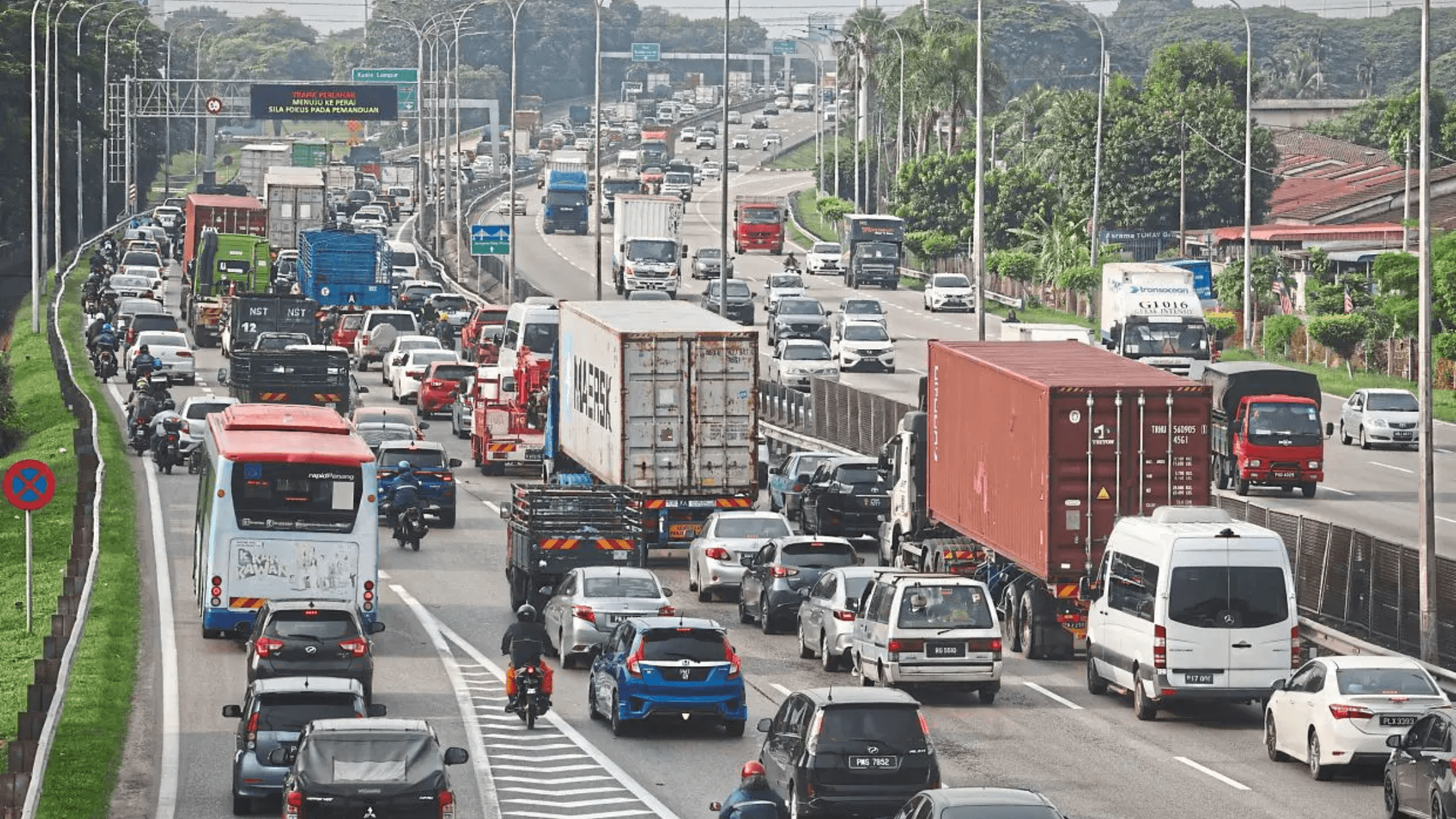
Congested highway traffic in Malaysia shows the complex road environment that autonomous logistics vehicles must navigate outside controlled areas. Images taken from: The Star
Malaysia logistics industry automation will move faster inside controlled areas than on public roads. Ports, plants, large warehouses, and industrial parks suit early trials because routes stay fixed and speeds stay low. Road use needs clear rules under the Road Transport Act 1987, insurance clarity, safety testing, and incident responsibility.
Leaders should not wait for full autonomous truck approval before preparing. They should prepare data standards, safety procedures, site maps, driver training, and maintenance rules for assisted driving systems. A company with clean operating records, strong safety culture, and connected vehicles will qualify faster for pilot projects.
Malaysia Logistics Industry Challenges To Solve
Malaysia’s logistics industry growth faces three main challenges.
- Cost pressure comes from fuel, wages, repairs, tyres, finance rates, and empty return trips. Operators should track cost per kilometer, cost per drop, loading time, on-time delivery rate, and repair cost per vehicle every month.
- Vehicle mismatch creates wasted cost. A truck with too much capacity burns extra fuel, while a truck with too little capacity needs more trips and more drivers. Buyers should match body length, payload, engine output, transmission, and service network to the real route profile.
- Talent pressure affects uptime and safety. New trucks use sensors, electronic braking, emission controls, and software diagnostics. Managers should track training hours, license status, safety incidents, and repeat repair cases as core operating data.
Malaysia Logistics Industry In 2026 And Beyond
Malaysia logistics industry winners in 2026 will make practical choices instead of chasing every new feature. They will upgrade older trucks where fuel and repair cost hurts margin, add EVs on short, predictable routes, and use telematics for measurable discipline. They will also build stronger after-sales plans, since uptime decides profit more than purchase price alone.
Operators should review each route before buying the next truck. Start with distance, load weight, waiting time, return load chance, driver hours, depot location, and service access. Then compare Euro V diesel, electric van, and telematics packages against the same route data before signing a purchase order.
For electric truck planning, Eco R’s JAC i75 EV Preview Malaysia Cost Savings Guide 2026 gives operators a practical reference for checking charging needs, payload fit, running cost, and payback before moving into EV adoption.
Malaysia Logistics Industry Commercial Vehicle Buying Direction
Malaysia logistics industry buyers need decisions based on route data, not sales claims. Before buying, compare payload, engine standard, charging plan, telematics, warranty, service reach, and cost per route. Eco R Truck Malaysia helps operators match the right commercial vehicle to daily mileage, load pattern, depot location, and long-term upgrade plan.
Continue with Eco R guides on Euro V truck models, electric commercial vehicles, telematics solutions, commercial vehicle buying guide, grants for vehicle upgrades, and heavy truck specifications.
Malaysia Logistics Industry FAQ
What Is The Malaysia Logistics Industry Outlook?
The outlook remains positive, with demand from e-commerce, manufacturing, ports, and infrastructure corridors. Malaysia logistics industry growth should stay practical because operators face fuel cost, hiring pressure, and customer demands for tracking. Truck buyers should focus on uptime, safety, cost per trip, and service support.
What Is The Future Of The Malaysia Logistics Industry?
The future centers on cleaner vehicles, better data, safer drivers, and faster warehouse-to-truck coordination. Operators who connect orders, dispatch, maintenance, and customer updates in one workflow will reduce errors. Commercial vehicles with strong after-sales support will hold an advantage because downtime damages delivery promises.
Which Industry Is Booming In The Malaysian Logistics Industry?
Services, manufacturing, digital commerce, construction, and warehousing support transport demand. The Malaysian logistics industry benefits when factories, online sellers, and ports move more goods across the country. Commercial vehicle buyers should follow demand near Klang Valley, Johor, Penang, and the East Coast corridors.
Which Company Leads The Malaysia Logistics Industry?
Ninja Van, DHL, Pos Malaysia, GDEX, City Link, and J&T all compete across parcels, courier, and contract logistics segments. The largest company depends on measures, such as revenue, parcel volume, warehousing space, or domestic coverage.
What Is The Malaysia Logistics Industry Future In 2026?
In 2026, transport operators will focus on Euro V upgrades, EV trials, telematics, route control, and warehouse automation. The Malaysian logistics industry should also prepare for stricter customer reporting on fuel use, delivery proof, and safety records. The best move starts with route data, then the right truck, then the right service partner.
How Can Eco R Help Malaysia Logistics Industry Buyers Choose The Right Commercial Vehicle?
Eco R Truck Malaysia helps Malaysian logistics industry buyers compare commercial vehicles based on real route needs, not sales claims. Buyers can review payload, route distance, fuel use, charging suitability, service access, warranty, and ownership cost before making a decision. This gives operators a clearer way to choose between Euro V diesel trucks, electric commercial vehicles, and telematics-supported vehicles.
Is the JAC i75 EV Suitable For Malaysia Logistics Industry Operators?
The JAC i75 EV suits Malaysia logistics industry operators with short, planned, and depot-based delivery routes. Buyers should check daily mileage, charging time, payload needs, body length, parking location, and service support before choosing an electric truck. View the full JAC i75 EV specifications on Eco R Truck to compare its fit for 14ft, 17ft, and 7.5 ton commercial transport needs.
Upgrade Your Business with Eco R Truck – Malaysia’s Leading Commercial Vehicle Dealer for Truck and Lorry
 You can always explore more at Eco R Truck!
Eco R Truck is Malaysia’s premier commercial vehicle dealer, offering a wide selection of new, used, and rebuilt truck malaysia. From light-duty to heavy-duty models, we provide high-quality trucks to meet the diverse needs of businesses across the country.
Ensure your business is equipped with reliable and efficient lorries and trucks with Eco R Truck’s comprehensive inventory and expert advice, you’ll find the perfect vehicle for your logistics, transportation, and delivery needs.
Follow Eco R Truck for Exclusive Offers:
- Access the latest truck models and specifications, including Hino, Isuzu, Mitsubishi, and more.
- Get expert advice on the best truck options for your business requirements.
- Join us for special promotions, updates, and exclusive deals on top truck models.
- Explore financing options and after-sales services that support your business growth.
Contact Eco R Truck Malaysia Today:
- Address:
Office: Lot 448 & 449, Jalan Kapar, Batu 1, 41400 Klang, Selangor
Yard: Lot 3200, Batu 3 1/4, Jalan Kapar, 41400 Klang, Selangor
- Email: [email protected]
- Phone: +6012-2290569
- WhatsApp for Inquiry: https://wa.link/ws6ncq
Visit Eco R Truck Malaysia’s Social Media Profiles:
- Website: https://ecortruck.com.my
- Facebook: https://web.facebook.com/wesleygweefromsendokgroup
- YouTube: https://youtube.com/@gweexiang?si=TPgD_ahzX-clQCPt
- Tiktok: https://www.tiktok.com/@wesleygwee_oe
Post Views:
31
You might also like
Diesel Subsidy Malaysia: How Lorry And Truck Operators Track Fuel Cost Changes
Last Updated: September 22, 2026 Diesel subsidy Malaysia policy now runs through a targeted system called
Volvo Electric Truck Malaysia: Cost, Range, And Fleet Fit Explained
Volvo Trucks Malaysia sells the first fully electric heavy duty prime movers in Southeast Asia, with

Isuzu D-Max 2026 Malaysia: Is The New 2.2 Turbodiesel Worth It For Business Buyers
A low purchase price does not automatically make a pickup the cheaper business asset. The Isuzu D-Max
Malaysia’s Most Trusted Commercial Vehicle Brands 2026: Top 7 Truck Brands Buyers Choose
Isuzu leads Malaysia’s most trusted commercial vehicle brands in 2026, with 6,880 truck registrations

Eco‑R Truck Authorized Distributor of XCMG Malaysia Truck-Mounted Cranes, Knuckle Boom Cranes, Loader Cranes, Excavators and Construction Machinery
Sendok Group is the sole distributor of selected XCMG truck-mounted cranes in Malaysia. The crane operation
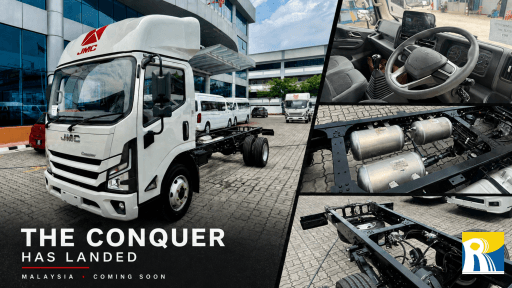
JMC All New Conquer in Malaysia Market Is Confirmed On The Ground At Eco R, Ready For Launch
A JMC All New Conquer chassis cab unit did not arrive quietly. It is confirmed on the ground at Eco R