
EV floor-price policy in Malaysia, how Proton and Perodua gain while buyers lose choice
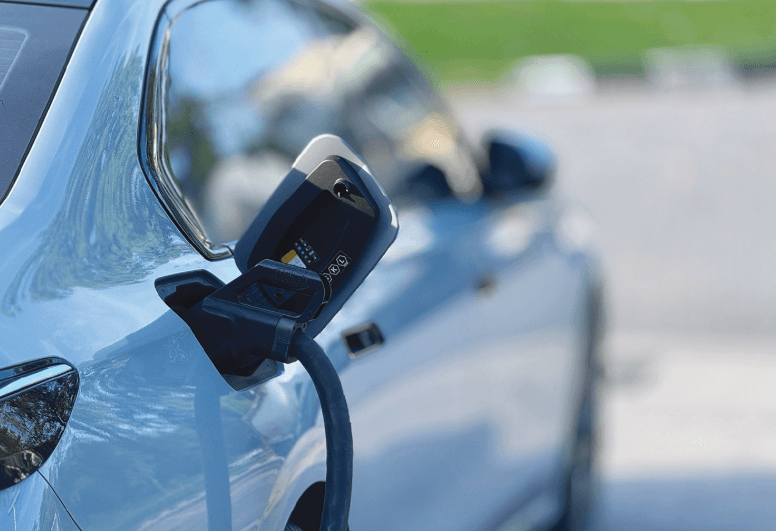
Image credit: Stricter EV rules in 2026 as floor price for new brands raised to RM250,000 [WATCH] -NST
The EV floor-price policy now shapes one of the biggest questions in Malaysia’s auto market. Buyers want more affordable EVs and greater model choice, while policymakers seek stronger local assembly, robust vendor partnerships, and increased job opportunities tied to manufacturing. As reported by The Star and reflected in MITI’s March 31, 2026, statement, the government is reviewing the EV floor-price policy to strengthen local assembly activities further while ensuring that CBU vehicle pricing is driven by market forces.
This debate matters because the EV floor-price policy sits between two goals that pull in different directions. Malaysia wants broad EV adoption, yet it also wants foreign brands to build deeper operations inside the country instead of treating Malaysia as a sales market only. Your reader needs a clear answer, and the clearest answer is this: the policy supports Proton, Perodua, and the local vendor chain in the short term, while buyers face a tighter choice and weaker affordability unless local CKD output moves faster and lands at lower prices.
EV floor-price policy, what the rule means
The EV floor-price policy sets a minimum price level for affected imported EVs. CBU means a fully built-up imported vehicle, CKD means a vehicle assembled locally from kits, and OTR means the final on-the-road selling price. The current framework places imported CBU passenger vehicles under a standard minimum OTR price of RM250,000, and The Star reported that the floor price for the current EV rule also carries a minimum power output requirement of 200 kW.
The rule also sits inside a recent policy timeline. MITI said the government lowered the minimum OTR for CBU EVs from RM250,000 to RM100,000 from 2022 until December 31, 2025, to stimulate demand and build EV familiarity in the market. January reporting said the scope later appeared to widen from new brands to new model approvals from existing brands, while April reporting said EV brands already operating in Malaysia were not affected, which explains why the review now matters for brands, dealers, and buyers.
EV floor-price policy: why the government brought it back
From the government side, the EV floor-price policy follows a clear industrial logic. MITI said local manufacturing and assembly, rather than ongoing reliance on CBU imports, forms the longer-term path for making EVs more accessible and affordable to Malaysians. MIDA also states that tax relief for fully imported CBU EVs ended on December 31, 2025, while components for locally assembled EVs remain exempt from import duty until December 31, 2027, so the state has designed the system to push brands toward local assembly rather than permanent import dependence.
EV floor-price policy: why Proton and Perodua gain space
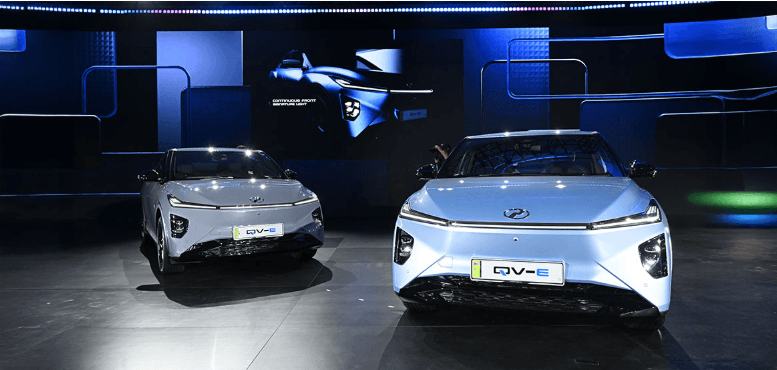
Image credit: Perodua launches QV-E, Malaysia’s first homegrown BEV – Perodua
The EV floor-price policy gives Proton and Perodua time and room to build their EV position before a larger wave of lower-priced imports hits the mass market. MITI said the earlier relaxation period was meant to grow buyer familiarity with EVs while giving Proton, Perodua, and the wider national automotive ecosystem time and space to develop EV capabilities and supply chains. The same MITI statement adds that Proton Geely and Perodua Daihatsu together account for more than 63% of local vehicle sales, support an ecosystem of more than 700,000 employees, and contribute about 4% of Malaysia’s GDP each year.
That point matters because national brands do not compete only on sticker price. Perodua maintains localisation above 75% on mainstream models, while Proton Geely reached 76% in 2025, according to MITI. When policymakers defend the EV floor-price policy, they are defending a chain that includes suppliers, engineers, logistics, training, and the domestic value added that comes from deeper local production.
H2: EV floor-price policy: why buyers face a harder market
For buyers, the EV floor-price policy creates a harder market in the short term. When lower-priced imported EVs become less available, buyers face fewer options and weaker price competition. This matters because affordability helped drive early EV growth in Malaysia.
What buyers may face:
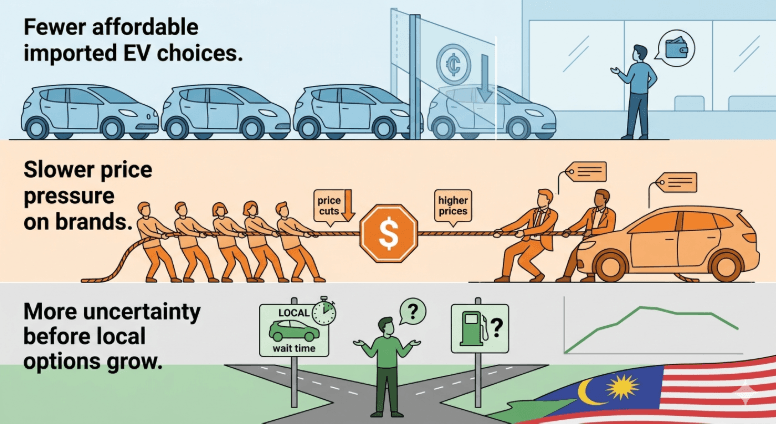
- Fewer affordable imported EV choices: Lower-priced imported EVs gave buyers more options during the earlier market opening. If fewer of these models enter the market, buyers in the lower and middle price range will have fewer choices. This makes it harder for first-time EV buyers to find a model that fits their budget.
- Slower price pressure on brands: When more imported EVs compete in the market, brands have more pressure to keep prices attractive. If that competition becomes weaker, price cuts may slow down. Buyers may need to wait longer for better prices or better offers.
- More uncertainty before local options grow: Some buyers may wait longer if local EV options are still limited. With fewer clear choices, they may delay buying an EV and stay with petrol or hybrid vehicles.
The numbers support this concern. Malaysia’s annual EV usage rose to 44,813 units in 2025 from 3,127 units in 2022. This shows how quickly EV adoption grew when imported EVs became easier to access. If the EV floor-price policy reduces affordability before local EV options improve, buyer demand could slow.
EV floor-price policy, what it means for EV adoption in Malaysia Market
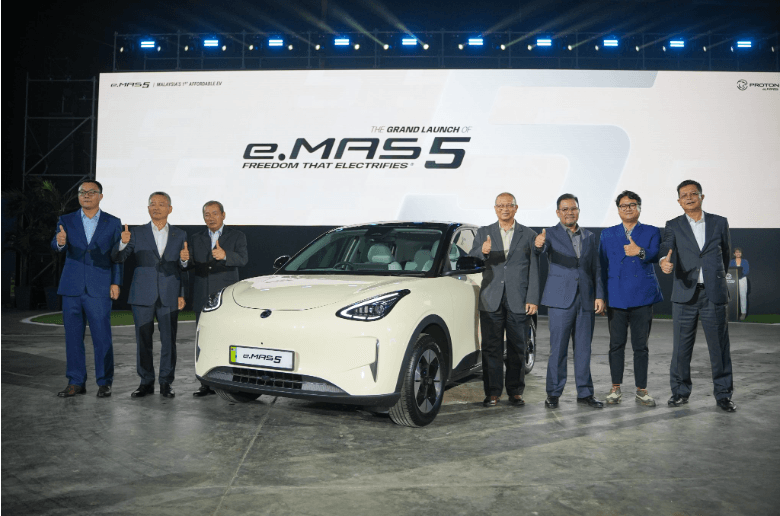
Image credit: PROTON Launches Proton e.MAS 5, Malaysia’s First Affordable Electric Vehicle – Proton e.MAS
The EV floor-price policy helps adoption only if it leads to a stronger local EV base within a short time frame. MIDA says Malaysia kept full import and excise duty exemptions for CBU EVs from January 1, 2022, to December 31, 2025, and continues to exempt locally assembled EV components from import duty until the end of 2027. That structure shows a two-step plan: first, open the market to build demand, then shift the market toward local assembly and supplier development.
The weakness in that plan appears when timing slips. EV adoption grew fast during the easier access phase, yet buyer momentum will slow if locally assembled products do not reach the market quickly with price tags that feel clearly better than current import-based offers. The EV floor-price policy therefore stands or falls on execution, not on theory, because the public will judge it by actual prices, actual launches, and actual value in the showroom.
How foreign brands respond
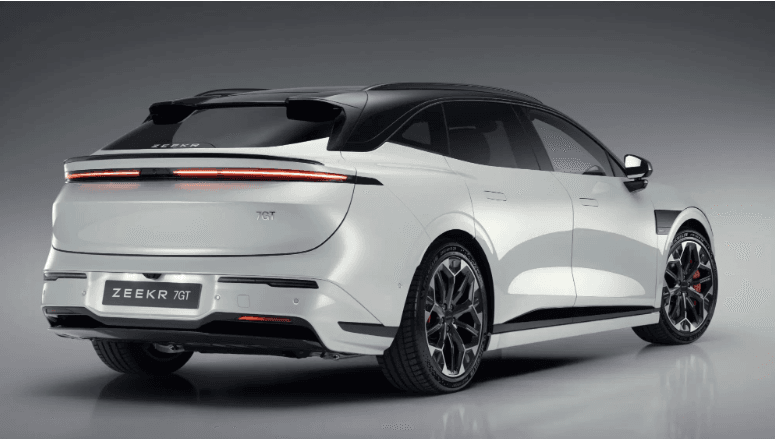
Image credit: New Chinese cars at Brussels Motor Show 2026: Zeekr & Leapmotor
Foreign brands already show the most practical response to the EV floor-price policy, which is local assembly. Reuters reported in December 2025 that EP Manufacturing Berhad signed an agreement to assemble XPeng’s G6 and X9 models in Malaysia, with G6 assembly scheduled by March 31, 2026, and X9 production scheduled for May 25, 2026. In March 2026, The Edge also reported that Zeekr, XPeng, and MG Motor planned to start local assembly activities in Malaysia in 2026 after the end of the earlier tax relaxation for imported CBU EVs.
That reaction shows what MITI wants the market to do. The ministry said its framework is developmental and aims to move Malaysia toward genuine high-value-added activities such as advanced manufacturing, engineering, technology transfer, and export-oriented production. The EV floor-price policy, therefore, acts as a pressure tool; it tells foreign brands to invest more deeply in Malaysia if they want better long-term access and pricing flexibility.
EV floor-price policy and the growing role of EV trucks in Malaysia
The EV floor-price policy matters because Malaysia’s EV push is no longer limited to passenger cars. It is also starting to influence commercial transport, where diesel trucks still dominate daily operations. The JAC i40 EV is one example of this shift, showing how electric trucks are beginning to enter practical delivery use. This change points to wider effects on transport costs, cleaner mobility, and future growth in Malaysia’s automotive industry.
Final verdict
The EV floor-price policy makes sense as industrial policy and as short-term relief for Proton, Perodua, and the local vendor base. The same EV floor-price policy places a real burden on buyers because it narrows lower-price import options and weakens direct price pressure at a time when broader adoption still depends on affordability. The right verdict is balanced and direct; the policy earns support only if Malaysia converts protection into fast CKD rollout, better local EVs, and clearly lower prices within the next phase of the review.
Upgrade Your Business with Eco R Truck – Malaysia’s Leading Commercial Vehicle Dealer for Truck and Lorry
You can always explore more at Eco R Truck!
Eco R Truck is Malaysia’s premier commercial vehicle dealer, offering a wide selection of new, used, and rebuilt truck malaysia. From light-duty to heavy-duty models, we provide high-quality trucks to meet the diverse needs of businesses across the country.
Ensure your business is equipped with reliable and efficient lorries and trucks with Eco R Truck’s comprehensive inventory and expert advice, you’ll find the perfect vehicle for your logistics, transportation, and delivery needs.
Follow Eco R Truck for Exclusive Offers:
- Access the latest truck models and specifications, including Hino, Isuzu, Mitsubishi, and more.
- Get expert advice on the best truck options for your business requirements.
- Join us for special promotions, updates, and exclusive deals on top truck models.
- Explore financing options and after-sales services that support your business growth.
Contact Eco R Truck Malaysia Today:
- Address:
Office: Lot 448 & 449, Jalan Kapar, Batu 1, 41400 Klang, Selangor
Yard: Lot 3200, Batu 3 1/4, Jalan Kapar, 41400 Klang, Selangor
- Email: [email protected]
- Phone: +6012-2290569
- WhatsApp for Inquiry: https://wa.link/ws6ncq
Visit Eco R Truck Malaysia’s Social Media Profiles:
- Website: https://ecortruck.com.my
- Facebook: https://web.facebook.com/wesleygweefromsendokgroup
- YouTube: https://youtube.com/@gweexiang?si=TPgD_ahzX-clQCPt
- Tiktok: https://www.tiktok.com/@wesleygwee_oe
Post Views:
16
You might also like
Diesel Subsidy Malaysia: How Lorry And Truck Operators Track Fuel Cost Changes
Last Updated: September 22, 2026 Diesel subsidy Malaysia policy now runs through a targeted system called
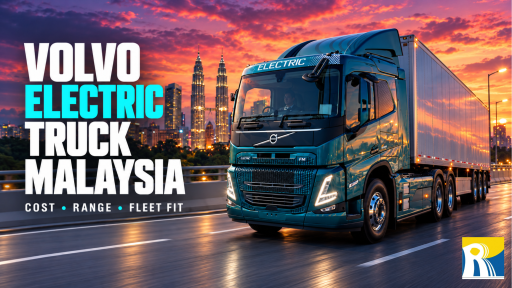
Volvo Electric Truck Malaysia: Cost, Range, And Fleet Fit Explained
Volvo Trucks Malaysia sells the first fully electric heavy duty prime movers in Southeast Asia, with

Isuzu D-Max 2026 Malaysia: Is The New 2.2 Turbodiesel Worth It For Business Buyers
A low purchase price does not automatically make a pickup the cheaper business asset. The Isuzu D-Max
Malaysia’s Most Trusted Commercial Vehicle Brands 2026: Top 7 Truck Brands Buyers Choose
Isuzu leads Malaysia’s most trusted commercial vehicle brands in 2026, with 6,880 truck registrations

Eco‑R Truck Authorized Distributor of XCMG Malaysia Truck-Mounted Cranes, Knuckle Boom Cranes, Loader Cranes, Excavators and Construction Machinery
Sendok Group is the sole distributor of selected XCMG truck-mounted cranes in Malaysia. The crane operation
JMC All New Conquer in Malaysia Market Is Confirmed On The Ground At Eco R, Ready For Launch
A JMC All New Conquer chassis cab unit did not arrive quietly. It is confirmed on the ground at Eco R